
Intervene with Individuals, Families, Groups, and Communities
This third stage of the cycle of social work is the time where the most work and progress takes place. During this stage, social workers implement intervention strategies with their client systems in order to enact change. Intervention strategies can be implemented at both the micro and macro level making it a diverse facet of social work. This competency was demonstrated by intervening with both individual clients and oganizational communities.
Implement Clinical Evidenced-based Interventions with Individuals, Families, and/or Groups
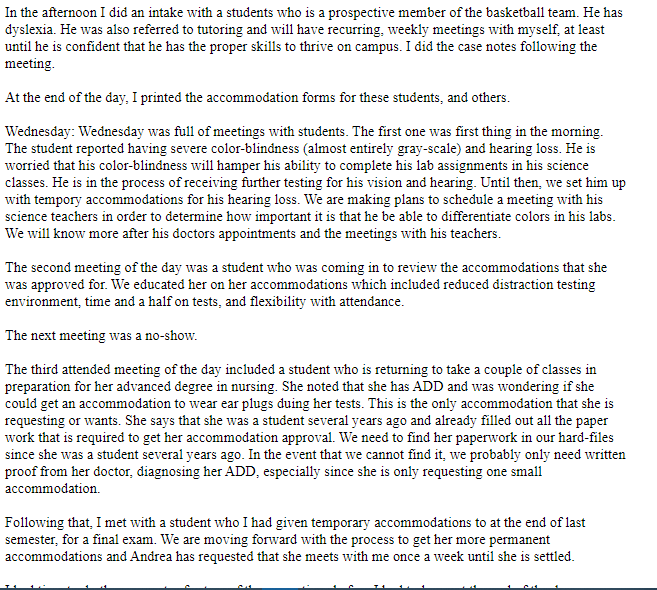
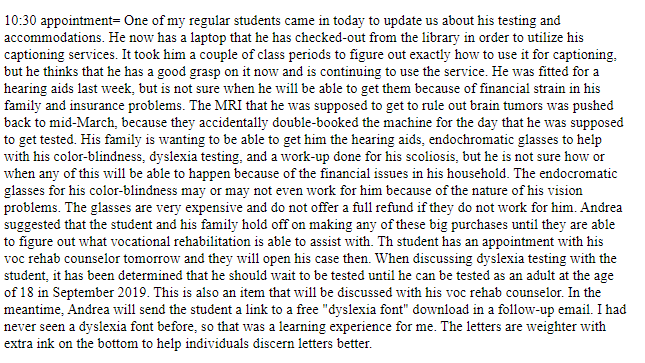
Field: During the Spring 2019 semester, each week, I provided students seeking Disability Access accommodations with possible intervention strategies to help them succeed academically that are tailored to their individual needs. Due to confidentiality, I have attached an excerpt from one of my journals detailing several of the accommodations we used that week as evidence.
Class: In my Fall 2018 clinical class, we demonstrated our therapeutic skills throughout several videos we recorded. One example is this 20 minute video that shows myself demonstrating several skills, including implementing clinical evidenced-based interventions with my client.
Other: One of the students that I worked with regularly at DSC required unique intervention strategies. The most notebly of which, was the use of a dyslexia font. This was a learning experience for me, as I did not know that such an intervention existed previously. 
Integrate Macro Level Evidenced-Based Strategies with Organization and/or Communities
Field: The SMART Goals that I created, based on the findings of my survey, will promote macro-level change within Disability Access by changing the way that initial appointments are created and how prepared students are at their initial appointment.
Class: During my summer emphasis course, one of the trips we went on was to the Chattanooga Housing Authority. During this trip, we learned about the organization of the CHA as an intervention strategy for the community of Chattanooga and had the opportunity to experience it like firsthand. Following this experience, I wrote a reaction paper.
Other: Another learning experience I had during my summer emphasis, was watching the resilience documentary that discussed Adverse Childhood Experiences and how they require a community-based approach to combat. Following the viewing of this documentary, I wrote a paper detailing my experience and reaction.