Competency #6: Engage with Individuals, Families, Groups, Organizations, and Communities
6.1 – Apply knowledge of human behavior and the social environment, person-in-environment, and other multidisciplinary theoretical frameworks to engage with clients and constituencies.
6.2 – Use empathy, reflection, and interpersonal skills to effectively engage diverse clients and constituencies.
When working with clients, it is extremely important to build rapport. The clients that we work with in the field of social work are often outcasts from society, and many have been treated poorly for much of their lives. We have to remember that the clients we work with, along with our constituencies, are more than what they have done in their past. They are human first and foremost and we always need to remember that. People come from different places in life, and we are all different. This is part of what makes humanity so beautiful.
Evidence:
Evidence 1 (Field) –
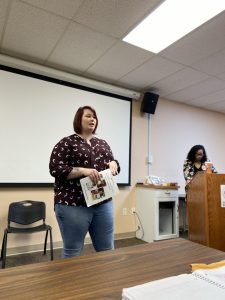
At the American Red Cross for my field placement, I am the Pillowcase Project Coordinator. The Pillowcase Project is an emergency preparedness program that is taught nationwide to children in the third through fifth grade. While in this role, I have had to reach out to numerous schools, afterschool groups, and homeschool co-ops to schedule presentations.
Evidence 2 (Academic) –
In my classes, I have managed to build on this competency as well. In Practice with Individuals, we called local organizations to learn more information to help our pseudo clients. I also have demonstrated this within our Networking and Career Development course. We took part in Meet the Firms, which is a large networking fair to gain information about local agencies for potential practicum placements.
Evidence 3 (Additional) –
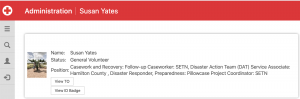
Additionally, at my field placement, I have the role of a caseworker. This entails if the client has given their consent, reaching out and contacting potential resource agencies to see what they could offer the client. I do this every day that I am at my practicum and assist other caseworkers with their clients as well.
Pillowcase Project School List
Knowledge Used: Throughout the fulfillment of this competency, I have been able to demonstrate the knowledge I learned in many of my classes including Practice with Individuals, Practice with Groups and Families, Interviewing Skills, and Networking and Career Development. I have learned how to conduct interviews with clients, how to reword questions to dig deeper and get to the route of the clients’ needs, and how to communicate professionally to seek resources for my clients.
Skills Used: I have used skills such as networking, and professional correspondence (both written and oral) when engaging with clients and constituents. I often use self-reflection, and professional supervision to improve my skill and communication and practice lifelong growth.
Values Presented: I have demonstrated the social work values of the Importance of Human Relationships and Service. Through many of my interactions, not only at Red Cross but in life, I try to remain intentional with my words and my relationships. Serving my clients in a respectful and compassionate way is very important to me.
Cognitive Process Used: I demonstrated multiple levels of the cognitive process while engaging with my clients, constituents and my community. I have been able to have intelligent conversations and discussions (understanding). I have been able to repeat back to my clients or others, through paraphrasing and clarification (remembering). I have been able to appraise the information gathered and the interactions made to best serve my clients (evaluating).
Affective Processes Used: When engaging with my peers and clients, I have used the affective processes of valuing and organization. As mentioned before I have been able to carry out many intelligent conversations increasing my knowledge of community resources that could, and have already, help my clients (valuing). I choose to attend coalition meetings, call referrals before sending them to clients, and attend board meetings at my practicum all to network and gain knowledge to further help my clients (organization).
Theoretical Foundation: When demonstrating this competency, I have drawn from a few theories. First, I draw from credibility. I build a good rapport with my clients by being honest when I do not know the answer. I am able to help in a lot of ways, but no one can know everything, and that’s important to communicate. I want my clients to remember that I am a person too, and I want to meet them where they are at. I also draw from prosocial behavior theory. This means I do not help my clients to gain anything in return. I help them simply because it’s the right thing to do. A lot of my clients, our clients in general as social workers, have been outcast by society and it is up to me to treat them with as much dignity and kindness as possible. They are only human, and.we need to remember that no matter what. This ties in very closely with human behavior in the environment and knowing that everything and one that a person interacts with, affects them both emotionally and physically.