Competency Five
Engage in Policy Practice
At the Chattanooga Neighborhood Enterprise, my practicum placement, we are working on gathering qualitative data to aid in the advocacy of policies here in Chattanooga and the entire state of Tennessee. These policies will be geared at improving the lives of our impoverished citizens and bring about social and economic change.
Practice Behaviors
5.1: Advocate with and inform stakeholders to impact policy change.
Academic Evidence: In the Advanced Social Policy course I was required, with my group, to research, prepare, and present a brief on a current piece of legislation. My group chose SB0589. This is a bill that was proposed to give felons the ability to register for their right to vote immediately upon completion of their sentence. This is a crucial piece of legislation as many of our nation’s felons do not currently have the ability to vote, a constitutional right.
5.2: Develop and implement a policy and/or advocacy plan.
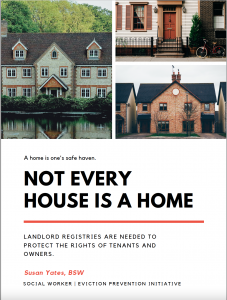
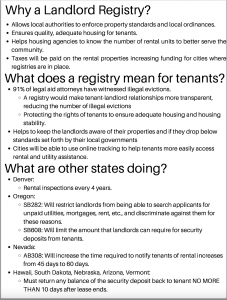
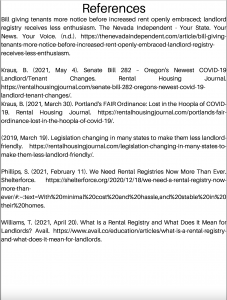
Field Evidence: When working with the EPI I developed a policy briefing to be presented to the Chattanooga Department of Business and Neighborhood Services that lays out in detail the benefits of incorporating a landlord registry. By looking at other states that have incorporated this type of registry, I have presented how this type of program could benefit not only the tenants but the landlords as well. Please see my briefing below.
Skills Used: Through the completion of the aforementioned practice behaviors I demonstrated professional written and oral communication, advocacy, and research.
Knowledge Presented: With the fulfillment of this competency I was able to advocate through the presentation of research on SB0589 and how it would benefit the nation as a whole. Giving individuals convicted of felony offenses their right to vote back, will eradicate the injustice and discrimination that is ongoing even after the completion of their sentence.
Values Presented: When looking at this competency there are many social work values in play that I was able to demonstrate. Firstly I was able to work towards social justice of previously convicted individuals of felony charges. I was also able to advocate for the dignity and worth of the person through this process.
Cognitive Processes: While demonstrating this competency I used comparison (evaluation domain) the differences between the current state statutes in Tennessee and the proposed changes with the passing of SB0589 and the rights that will be reestablished for previously convicted felony charged individuals. I also used producing (creation domain) when creating the policy brief that is included above.
Affective Processes: Through creating (organizational domain) my policy brief for SB0589 I also had to examine (organizational domain) the current and proposed changes that would allow individuals who were convicted and served their sentences to completion the ability to immediately register to vote and exercise their civic responsibilities.
Theoretical Foundation: Social Representation Theory states that in order for people to communicate effectively they must have some type of mutual understanding and all types of people must be represented. The advocacy of SB0589 would allow for a previously unrepresented population to take part in our democracy and practice their right to vote.