


This competency ensures that social workers understand that intervention is an ongoing component of social work practice. By meeting this competency I demonstrate that I am knowledgeable about evidence-informed interventions and that I understand theories of human behavior and the social environment, and critically evaluate and apply this knowledge in social work practice. As a social worker I vow to value the importance of interprofessional teamwork and communication in interventions, recognizing that beneficial outcomes may require interdisciplinary, interprofessional, and inter-organizational collaboration.
Competency:
Intervene with Individuals, Families, Groups, Organizations, and Communities
Practice Behaviors:
1. Critically choose and implement interventions to achieve practice goals and enhance capacities of clients and constituencies.
2. Analyzing knowledge of human behavior and the social environment, person-in-environment, and other multidisciplinary theoretical frameworks in the analysis of assessment data from clients and constituencies.
3. Use inter-professional collaboration as appropriate to achieve beneficial practice outcomes.
4. Negotiate, mediate, and advocate with and on behalf of diverse clients and constituencies.
5. Facilitate effective transitions and endings that advance mutually agreed-on goals.
Evidence Based Learning:
1. I demonstrated this practice behavior in practicum by implementing my agency’s organizational goals while working with clients. In the classroom I demonstrated this by conducting an intervention with a pseudo client. Here is the link for the YouTube video.
2. In order to fulfill the requirements for this competency, I researched prevention methods and implemented these in the Independent Living Groups. In the classroom I did this by conducting a bio-psycho-social assessment.
3. I referred clients to the Center of Excellence, and to Centerstone. In the classroom I demonstrated this by advocating for a policy and presenting the information to one of the senator’s staffers.
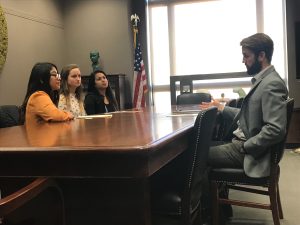
4. When a client was terminated, I conducted a satisfaction survey with the family. In the classroom I demonstrated this by learning about policies and how to advocate for diverse clients at Lewis and Burke in Washington, D.C. I also wrote a mini grant proposal in order to advocate for client programs.
5. I demonstrated this by discussing termination with clients and with my supervisor. In the classroom I did this by practicing my termination skills with pseudo clients.