Evaluation
Competency #9: Evaluate Practice with Individuals, Families, Groups, Organizations, and Communities
Social workers understand that evaluation is an ongoing component of the dynamic and interactive process of social work practice with, and on behalf of, diverse individuals, families, groups, organizations and communities. Social workers recognize the importance of evaluating processes and outcomes to advance practice, policy, and service delivery effectiveness. Social workers understand theories of human behavior and the social environment, and critically evaluate and apply this knowledge in evaluating outcomes. Social workers understand qualitative and quantitative methods for evaluating outcomes and practice effectiveness. Social workers:
Practice Behavior 1: Select evidence-based evaluation strategies according to their efficacy with specific client systems
Practice Behavior 2: Evaluate the efficiency and effectiveness of practice outcomes across systems
Competency #9 in Practice
Competency 9 calls me to evaluate what I am doing regularly so I know how I can do it better. It asks me to use my mistakes and weaknesses and turn them into strengths as time goes by. It helps me pinpoint what I am doing well and what can change so my clients can get the most out of working with me. It holds me accountable for what I do with and for my clients and helps me maintain my rate of efficacy. It makes every social worker the best versions of themselves that they can be.
Evidence for Practice Behavior 1: For this practice behavior, I created with my group in my Program Development class during my first semester of my Advanced year. As the main assignment in the class, we created a program for Centerstone involving pet therapy for children with anxiety. This paper outlines how we would review the efficacy of our program. You can find this section near the end of the paper.
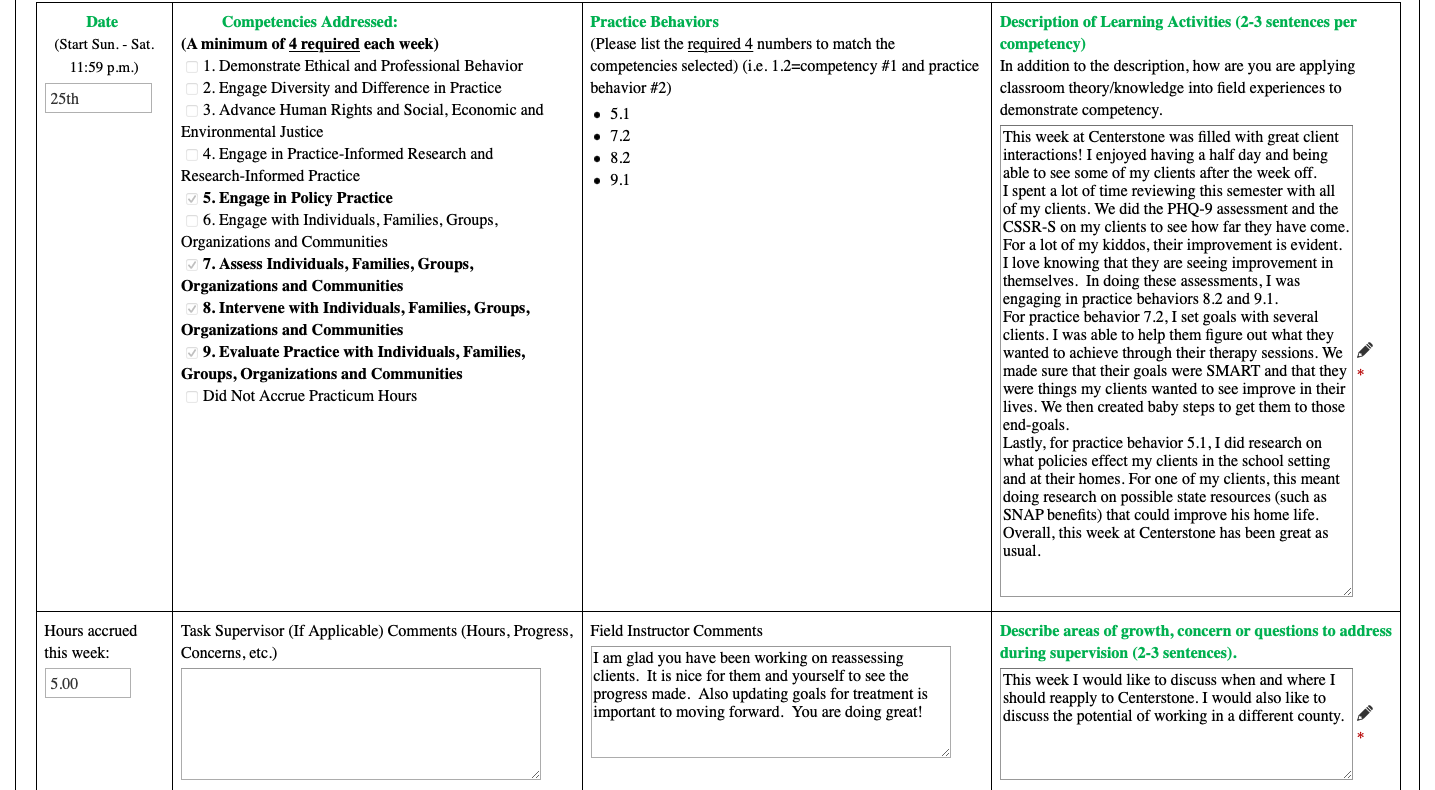
For this practice behavior I planned to evaluate my clients with the Patient Health Questionnaire (a screen for depression and anxiety) to see how far each of them had progressed in their treatment with me. In doing this, I could also see how effective I was being as their practitioner. To see the journal about this process, please click here.
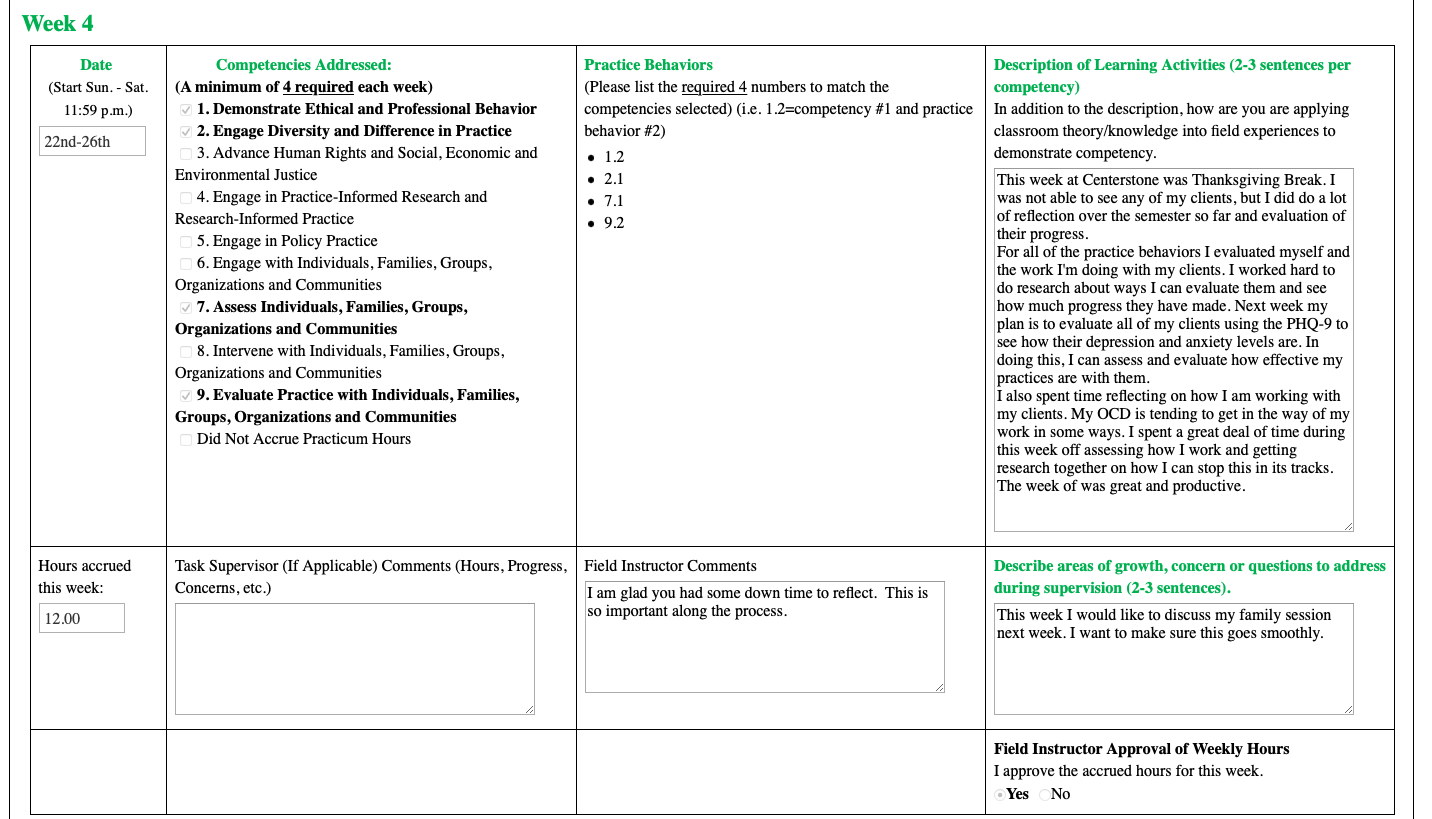
Evidence for Practice Behavior 2: For this practice behavior, my evidence is an evaluation I did on myself for my Practice with Families and Individuals class. In the video, I ran a session with a pseudo client using cognitive behavioral therapy. The evaluation form had me evaluate my efficiency and effectiveness during and after the session.
For this practice behavior, I have a journal stating that I evaluated my practice with most of my clients with both the Patient Health Questionnaire (an anxiety screen) and the Columbia Suicide Severity Rating – Scale (a depression screen). In doing this, I compared several of my client’s scores to the beginning of their treatment. The results were overwhelmingly successful. The same scales were selected to evaluate each client’s progress throughout their treatment at Centerstone.
The knowledge I used for this competency is related to my knowledge of evidence-based research. To effectively evaluate, it has to be research and evidence-based. This competence involves the social work values of dignity and respect of individuals. This means upholding the best standard of care for my clients by doing evidence-based research for evaluation practices. I had to use listening, empathy, communication and research for this Competency. For these evidences I distinguished, produced information and looked critically at the individual and their system involvement. For these tasks, I also had to organize and listen. Systems theory informed my practice with this Competency. It helped me to take a step back and look at my client not just as an individual, but also as a part of other systems.