
(1.1) Advocate for client access to the services of social work.
Field: I demonstrated this competency by reviewing the policies and regulations for nursing homes and assisted living facilities, so that I could use that knowledge to advocate for residents’ rights throughout my 400 hour internship.
Class: In my Social Welfare in Policy class (SOCW 434), I had the opportunity to, with a group of my peers, create a policy brief that highlighted the need for cyber-bullying to be considered a form of harassment in Title IV. This issue is one that needs to be considered for the safety of today’s youth.
(1.2) Practice personal reflection and self-correction to assure continual professional development.
Field: I kept a weekly journal during my practicum experience in which I wrote my 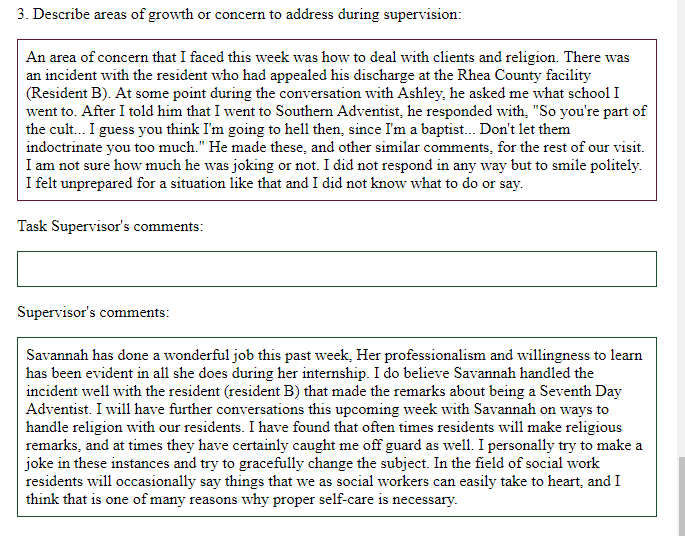 personal experiences in the field. My field supervisor often discussed these experiences with me and gave me tips from her own experiences. This is an example of an experience I had and journaled about that my supervisor gave advice on.
Class: In Integrative Seminar I (SOCW 441), I had the opportunity to write a paper that focused on my personal integration of faith into social work practice. This paper demonstrates self-reflection in order to assure my future professional development through the integration of faith in practice.
(1.3) Attend to professional roles and boundaries.
Field: In practicum, I completed a self-care assessment and created a self-care plan based on the findings of the assessment. I integrated my self-care plan into my daily routine in order to maintain my well-being.
Class: Part of the roles and boundaries of professionalism includes peer and self-evaluation. For Social Work Practice with Groups and Organizations (SOCW 319), I had to complete group facilitation peer and self-evaluation forms for video critique based on the group facilitations that we did, including a peer review and a self-evaluation.
(1.4) Demonstrate professional demeanor in behavior, appearance, and communication.
Field: I demonstrated professionalism through my appearance and actions when I 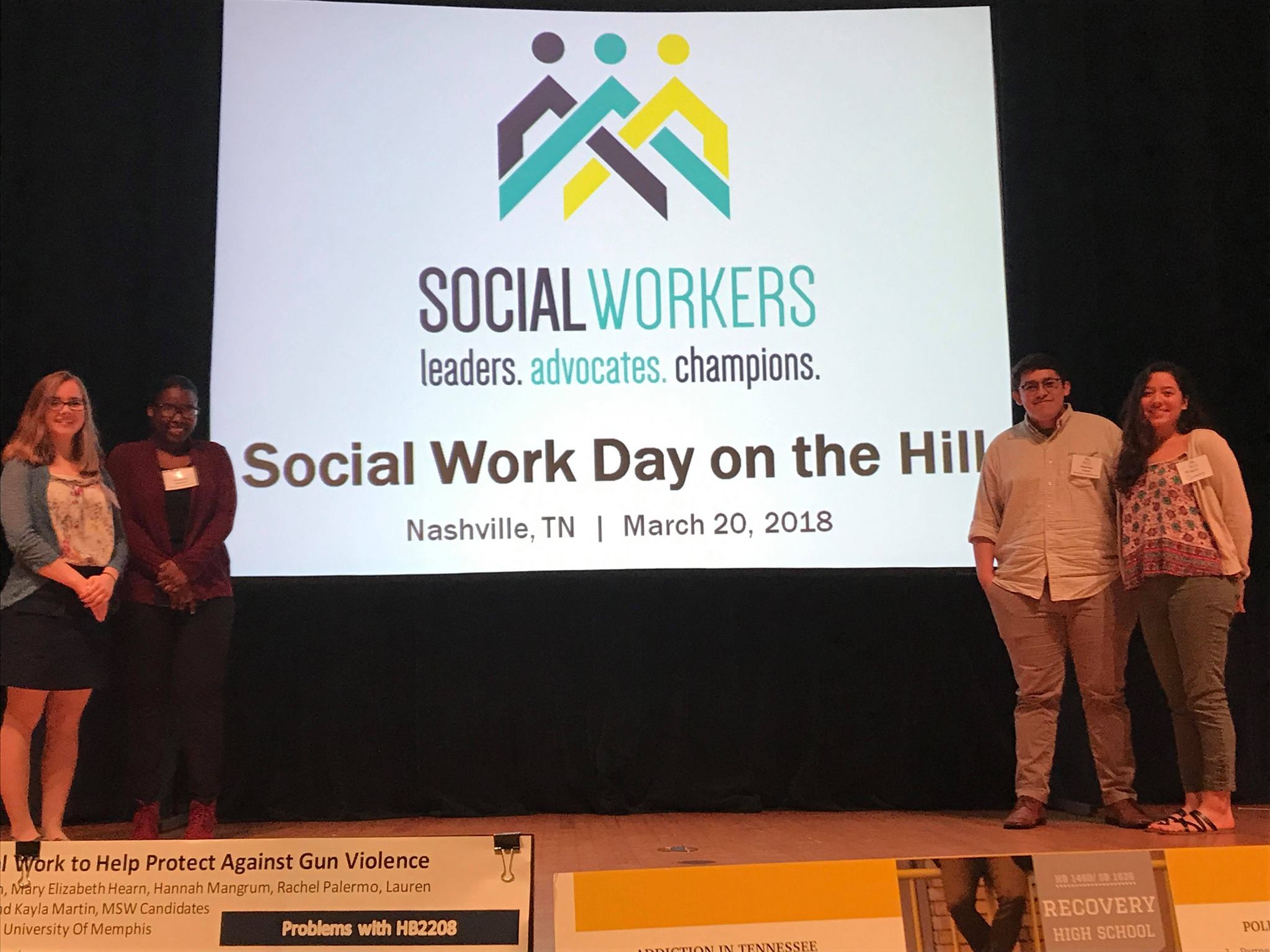 attended Social Work Day on the Hill on March 20, 2018.
Class: Following the policy brief in SOCW 434, my group and I attended Campus 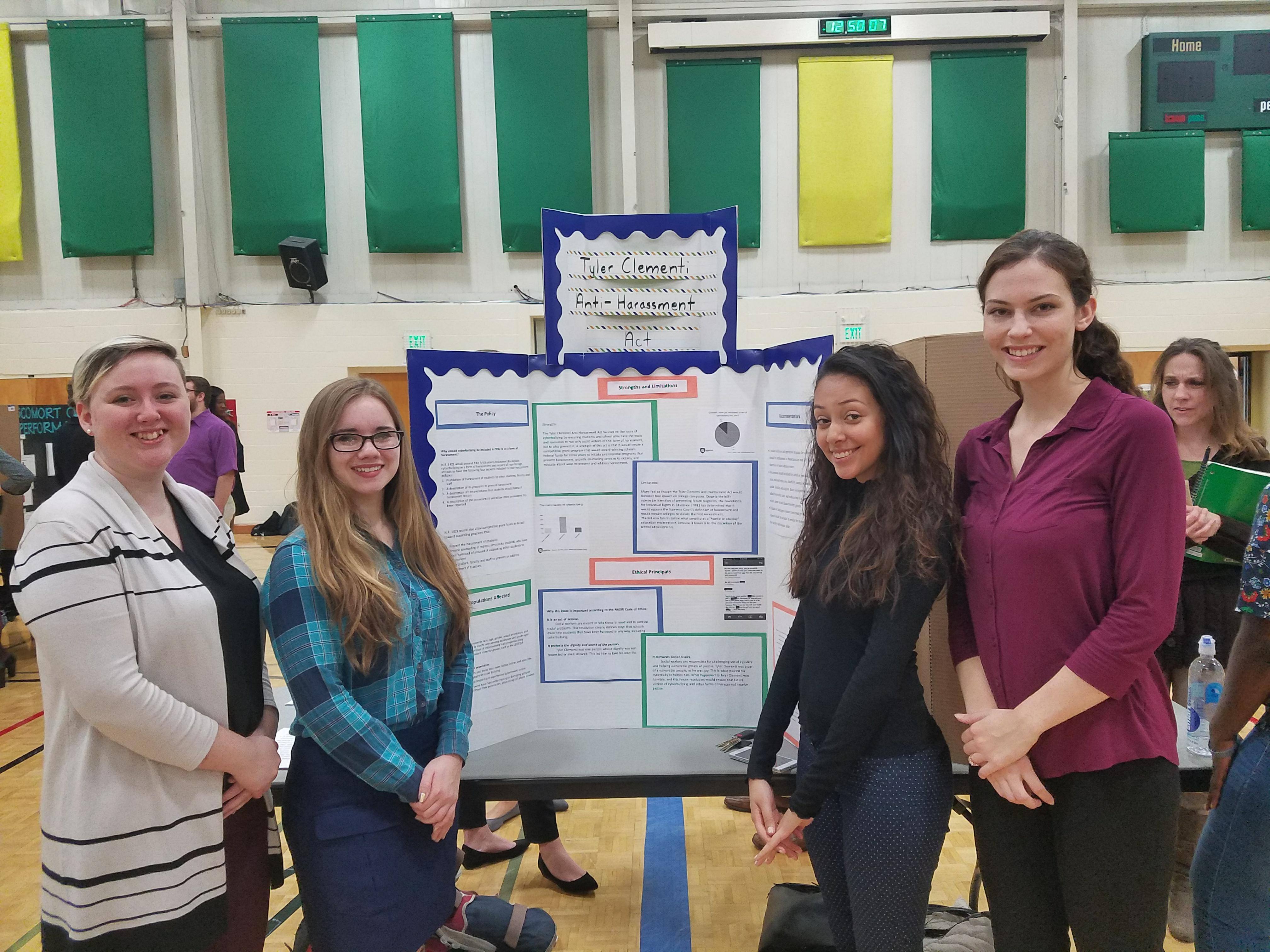 Research Day, where we presented a poster board presentation on the topic. Together, we demonstrated this practice behavior through our professional behavior, appearance, and communication during the event.
(1.5) Engage in career-long learning.
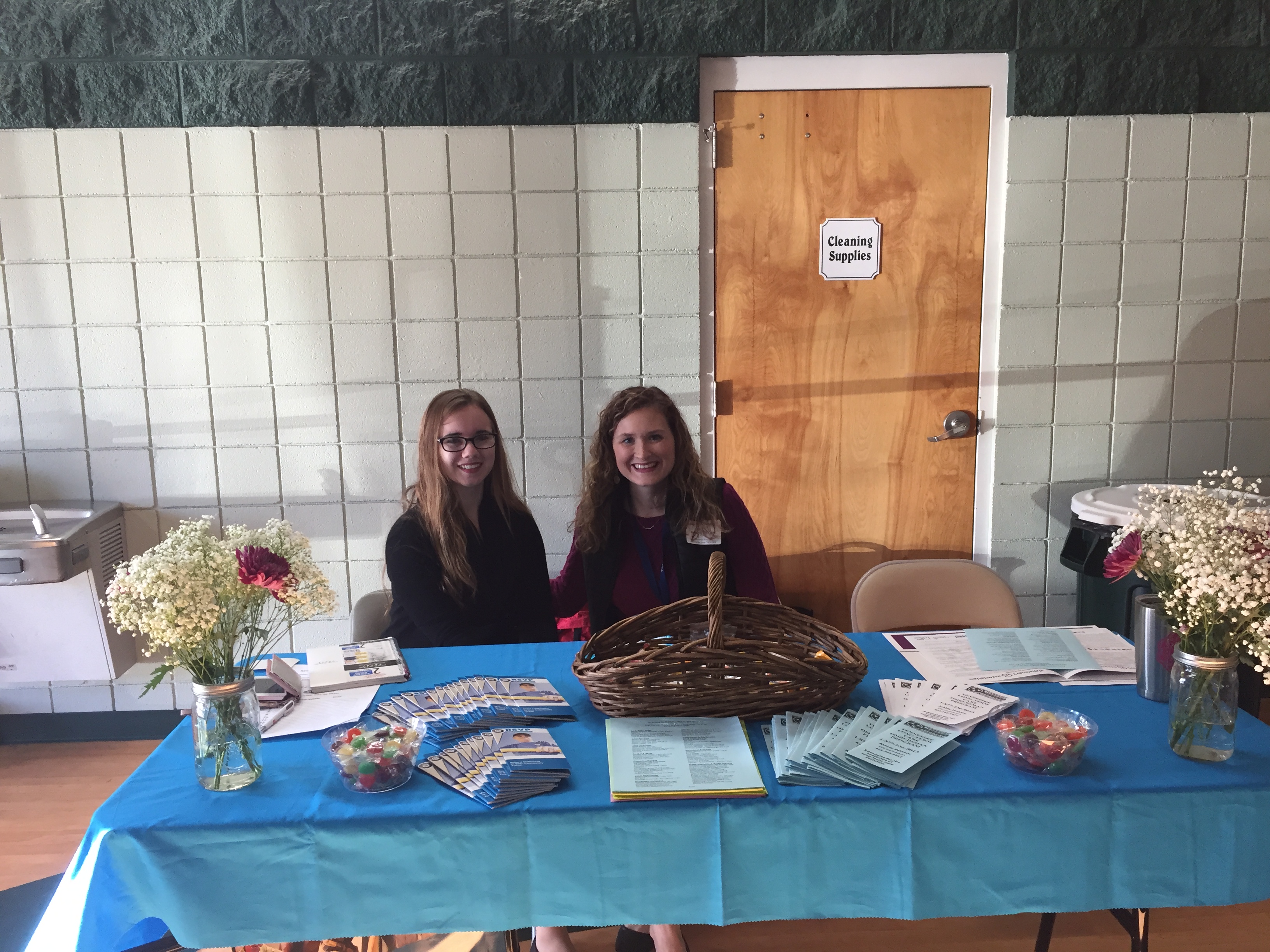
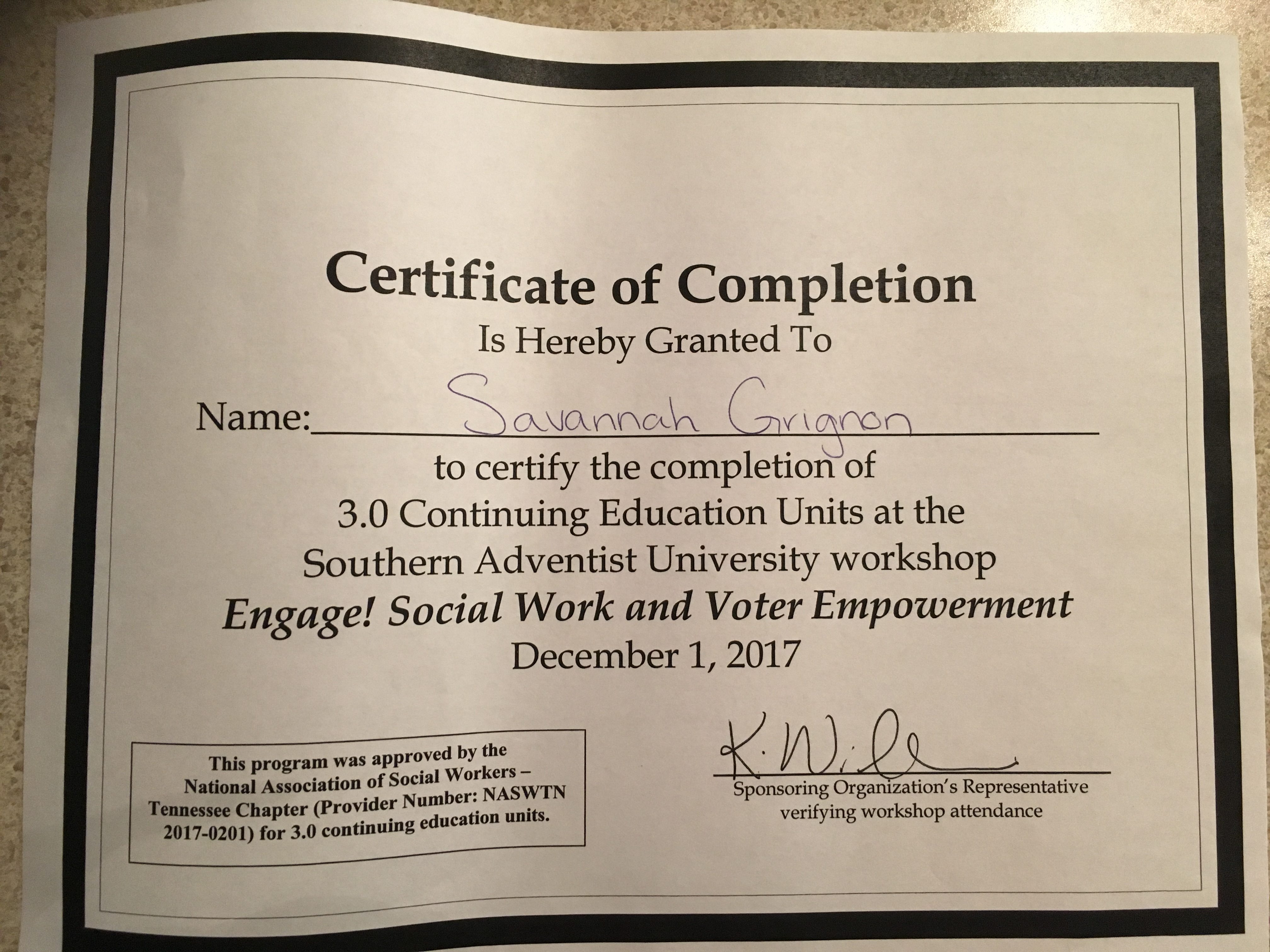
Field: I participated in 3 or more service and educational trainings in addition to the trainings required by the my practicum placement. The educational opportunities that I participated in include a Volunteer Red Cross training on shelter fundamentals on September 7, 2017; the annual Alzheimer’s Conference on November 17, 2017; a Voter Engagement workshop on December 1, 2017; and Social Work Day on the Hill on March 20, 2018.
Class: One of the ways to demonstrate career-long learning is staying current on global events and news. In my Social Welfare in Policy class (SOCW 434), one of our weekly requirements was to write a current events journal about a news article that we read that week.
(1.6) Use supervision and consultation.
Field: I had the opportunity to learn about the process of documentation at my agency into the “Ombudsmanager” database. Below are journal entries of me receiving supervision with documentation.


Class: As a part of my 4o-hour practicum experience for Jr. Field Practicum (SOCW 391), I wrote a learning plan based on Competency 1- Professionalism, and had it evaluated by my supervisor at the end of my 40 hours.