
ENGAGEMENT
(10.1) Substantively and effectively prepare for action with individuals, families, groups, organizations, and communities.
Field: I have become a certified Volunteer Ombudsman Representative (VOR) and am 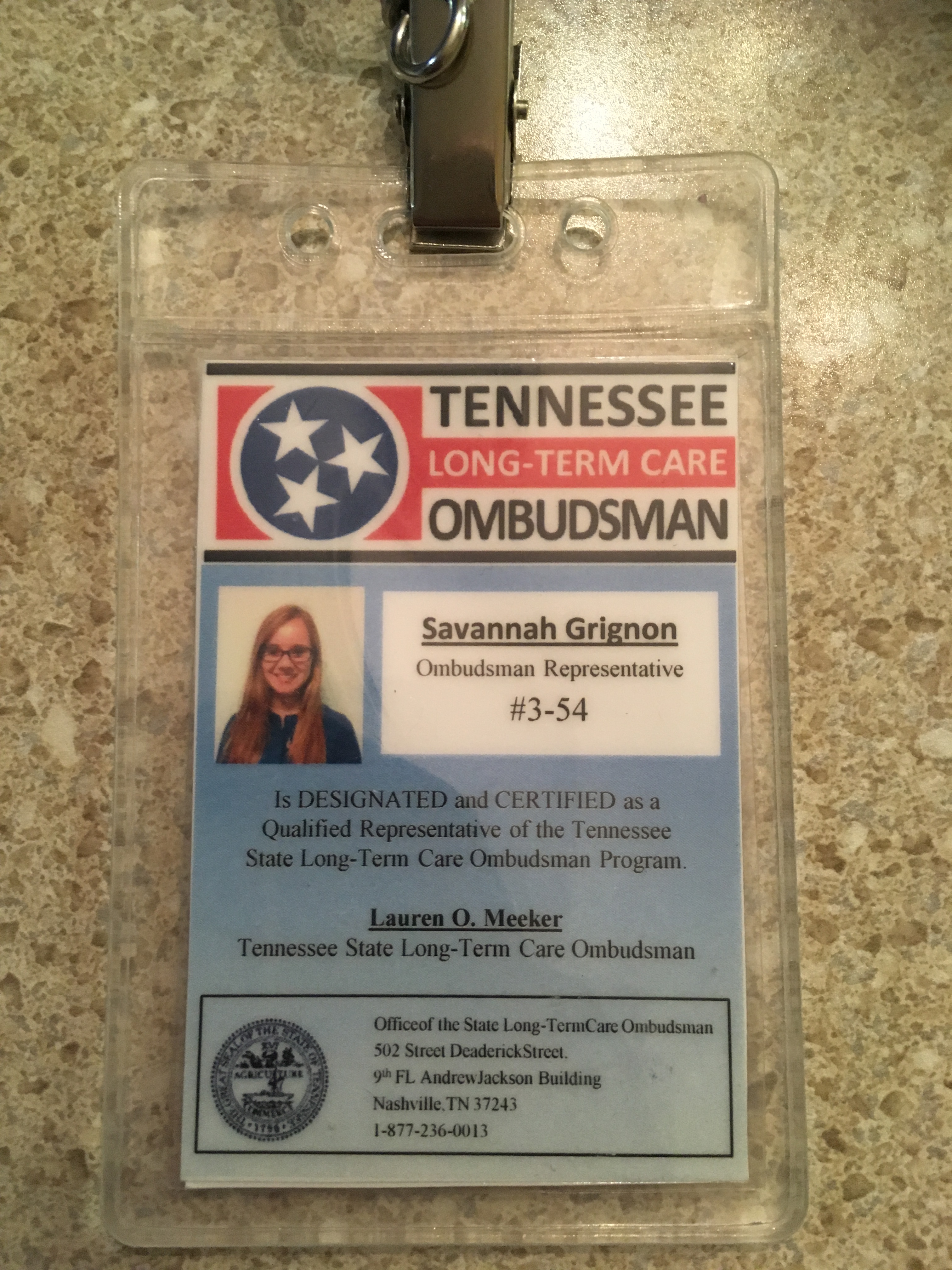 competent to work with residents and staff to handle resident complaints.
Class: In one of my classes, my peers and I did an Organizational Assessment Analysis on a local agency. Assessments like these help agencies to visualize their strengths and weakness to improve their quality of services.
(10.2) Use empathy and other interpersonal skills.
Field: I encountered a case of potential financial exploitation with “Resident V.” The pictures included provide a description of the case and its connection to this practice behavior from my journal entry of that week. 

Class: In my Interviewing Skills class (SOCW 213) I created a process recording of a 15-minute interview that I conducted with a pseudo-client. Throughout the dialog, my use of empathy and other interpersonal skills is evident.
(10.3) Develop a mutually agreed-on focus of work and desired outcomes.
Field: This excerpt from one of my weekly journals shows an example of a care plan that I attended and its desired outcomes. 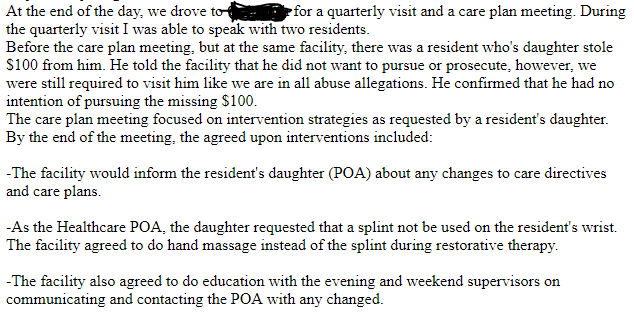
Class: During Social Work Practice with Individuals and Families (SOCW 310) class, we each conducted a series of interviews that showcased our competency 10 skills. This assessment interview demonstrates my competency in developing agreed-upon outcomes with my pseudo-client.
ASSESSMENT
(10.4) Collect, organize, and interpret client data.
Field: Several times throughout my practicum experience, I had the opportunity to document cases that I was witness to onto the “Ombudsmanager” database. The picture provided is an portion of a journal entry where I mentioned documenting cases. 
Class: During my Human Behavior in the Social Environment class (SOCW 312), I conducted a bio-psycho-social assessment interview on a pseudo-client. The assessment involved an interview where I collected the data and the writing portion where I organized it into the paper.
(10.5) Assess client strengths and limitations.
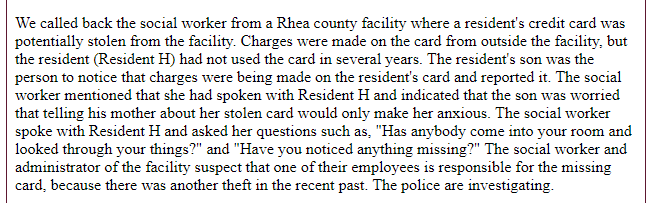
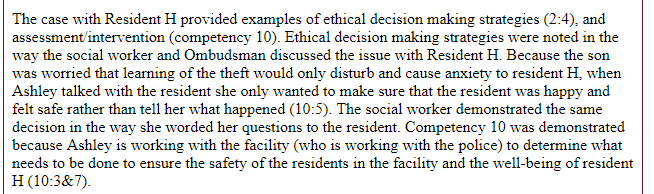
Field: This practice behavior was demonstrated during the case of Resident H. My journal entries from that case are provided below for reference.
Class: In addition to being able to assess client strengths and weakness, it is also vitally important to be able to assess one’s own strengths and weakness. That is why this self-assessment paper is a good example of my competence in this practice behavior.
(10.6) Develop mutually agreed-on intervention goals and objectives.
Field: In the case of Resident K, she told us exactly what she wanted from us. This journal excerpt is the background of her case. 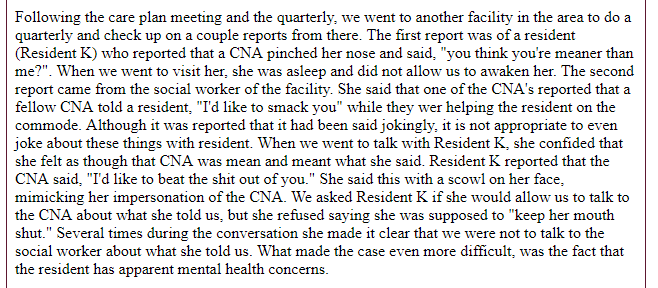
Class: This process recording completed after a 15-minute video interview shows the interventions that the pseudo-client and I discussed and agreed on.
(10.7) Select appropriate intervention strategies.
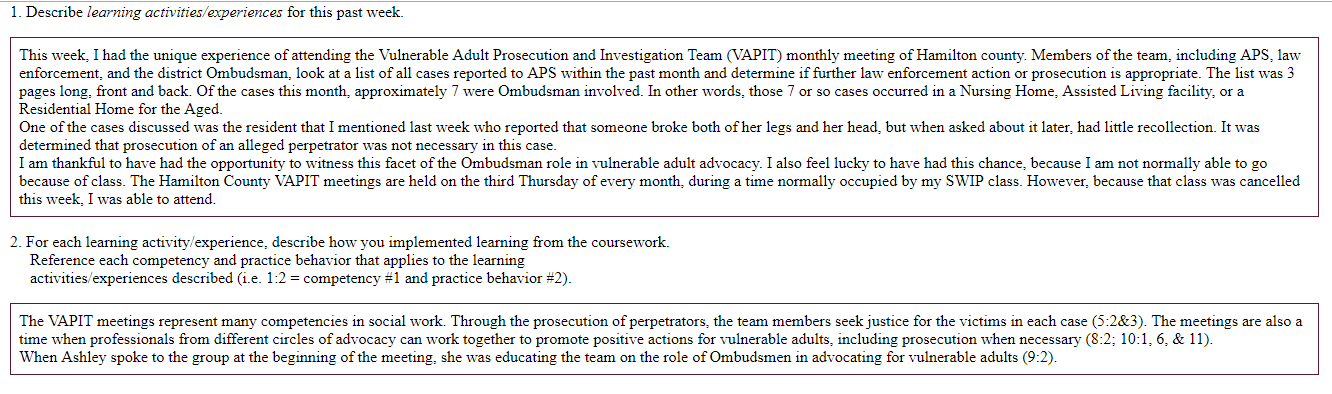
Field: At the Hamilton County Vulnerable Adults Protection Interdisciplinary Team (VAPIT) meeting that I attended, professionals determined the best course of action in abuse and neglect cases from that month.
Class: This program evaluation presentation based on a 5 weekly student group sessions shows the intervention goals the students had and how they accomplished them.
INTERVENTION
(10.8) Initiate actions to achieve organizational goals.
Field: My practicum supervisor and I attended the annual Alzheimer’s Caregiver Conference. While there, we manned a booth with other members from The Partnership and provided the community with information about the Ombudsman Program.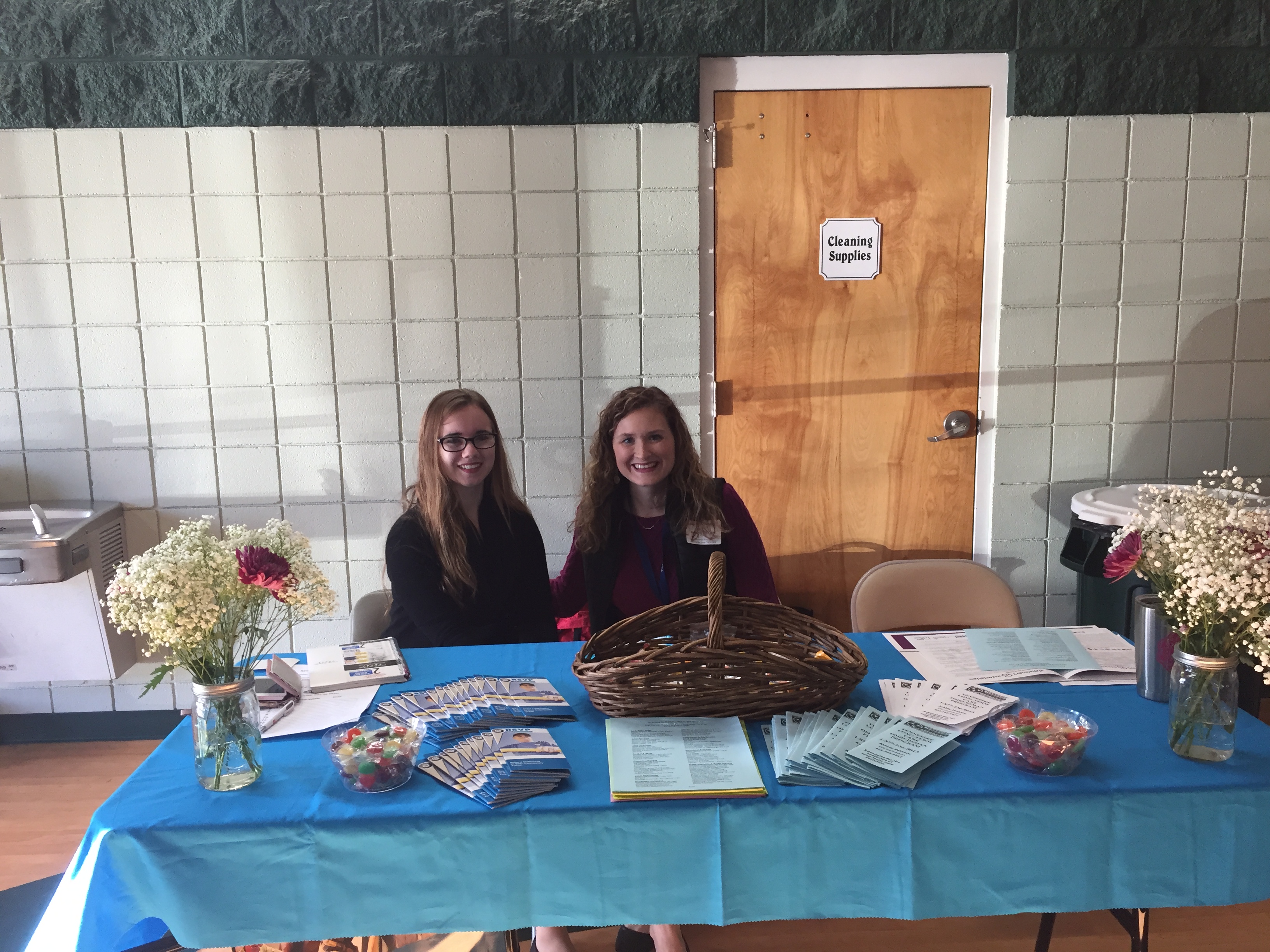
Class: For class, we each had the opportunity to create a mini grant proposal that gave us insight into the process of applying for grants and how that knowledge is useful in agency settings.
(10.9) Implement prevention interventions that enhance clients capacities.
Field: This journal excerpt outline intervention objectives from a care plan meeting that I attended.
Class: In Social Work Practice with Individuals and Families (SOCW 310), I had a pseudo-client that I worked with for several sessions, including the intervention stage. This case presentation that I presented to the class highlights this learning experience.
(10.10) Help clients resolve problems.
Field: During the November Volunteer Ombudsman (VOR) Training, we learned how the customer service of the Ombudsman program can affect our ability to help clients.
Class: My assessment interview with my pseudo-client shows my ability to help clients resolve problems. This interview was conducted for the Social Work Practice with Individuals and Families (SOCW 310) class.
(10.11) Negotiate, mediate, and advocate for clients.
Field: Resident C’s case, provided an example of this practice behavior. Below are snippets of the journal I completed following his case that describe the case and how it relates to this competency. 

Class: During my experience with my pseudo-client, I had the opportunity to demonstrate this practice behavior with her during our sessions. This case presentation outlines our time together.
(10.12) Facilitate transitions and endings.
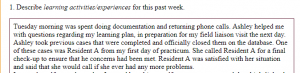
Field: Resident A is the first client that I met during my hours with the Ombudsman Program. Below is a portion of the journal when we first opened her case and another journal excerpt from when we closed her case. 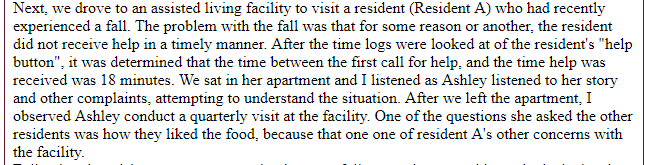
Class: In Social Work Practice with Groups (SOCW 310), I had the opportunity to conduct several group sessions for middle-schoolers with my peers. The group was named Smarties for Life. We threw a party for them on the day of the last session. This was meant to ease the students into the idea that we would not be coming to visit with them anymore.
EVALUATION
(10.13) Critically analyze, monitor, and evaluate interventions.
Field: Below is a description of the case with Resident N and a journal excerpt of when we called to evaluate how the agreed-upon interventions were doing. 

Class: This Organizational Assessment Analysis, that I helped create, is an example of how organizations can analyze and evaluate their services.