Social workers understand how racism and oppression shape human experiences and how these two constructs influence practice at the individual, family, group, organizational, and community levels and in policy and research. Social workers understand the pervasive impact of White supremacy and privilege and use their knowledge, awareness, and skills to engage in anti-racist practice. Social workers understand how diversity and intersectionality shape human experiences and identity development and affect equity and inclusion. The dimensions of diversity are understood as the intersectionality of factors including but not limited to age, caste, class, color, culture, disability and ability, ethnicity, gender, gender identity and expression, generational status, immigration status, legal status, marital status, political ideology, race, nationality, religion and spirituality, sex, sexual orientation, and tribal sovereign status. Social workers understand that this intersectionality means that a person’s life experiences may include oppression, poverty, marginalization, and alienation as well as privilege and power. Social workers understand the societal and historical roots of social and racial injustices and the forms and mechanisms of oppression and discrimination. Social workers understand cultural humility and recognize the extent to which a culture’s structures and values, including social, economic, political, racial, technological, and cultural exclusions, may create privilege and power resulting in systemic oppression.
Social workers:
a. Demonstrate anti-racist and anti-oppressive social work practice at the individual, family, group, organizational, community, research, and policy levels; and
b. Demonstrate cultural humility by applying critical reflection, self-awareness, and self-regulation to manage the influence of bias, power, privilege, and values in working with clients and constituencies, acknowledging them as experts of their own lived experiences
My Narrative
This competency urges social workers to have the awareness of cultural competence and an awareness to mitigate bias, privilege, and power. This can be done by coming into situations with the stance of “not knowing”, by listening, summarizing and reflecting in order to truly work toward client goals. Social work requires self-awareness, and the willingness to challenge one’s own bias and preconceived notions about the world around them.
This competency challenges the ability to understand the importance of diversity and to broaden my understanding of the purpose of it. This competency challenges my ability to find actions that match my values, by living in a way that honors those who are outcast in society based on gender, economic standing, religion, and culture, but this cannot be done in an environment and attitude of racism or othering.
I will remain committed to this competency by continuing to further my education. I will do the work “at home” by being engaged in cultures other than my own, continuing to learn Spanish, and being up to date with policies that affect different populations.
This competency is specifically important to me in my role as a future clinician because I will encounter many people of all races, cultures, and nationalities. This competency requires constant learning and evaluating my own thoughts and how those affect my actions and behaviors.
School Evidence
SOCW-323-Human Behavior and the Social Environment II-Research Paper
This research paper was written about how people’s attachment styles affect the way in which they relate to a higher power. I explained each of the attachment styles-insecure, anxious, and avoidant. Each of these attachment styles can be a reaction to life events, but can affect relationships, even spiritual relationships, as seen in the literature review.
I chose this evidence because this review really focused on the inclusion aspect of competency three. Diversity is not simply about culture, gender, or economic standing, but also encompasses religiosity and belief systems of individuals. Individuals are complex and diverse in thought based on experience, family history, personal conviction, etc. Social Workers realize that these differences can cause alienation in this society. We realize the importance of all aspects of an individual-their sense of self spiritually, mentally, physically. I believe that this report helped broaden my perspective of what it means to be inclusive in all spaces, including religion, by researching ways that people relate to their higher power.
I used the skills of discernment and research during this assignment. I was incredibly interested in the intersection of attachment and relationships, and I wanted to delve deeper into the topic by looking at it from the angle of higher-power relationship.
Field Evidence
How to Support LGBTQ+ Patients in Hospice-Literature Review
For this project, I decided to create a literature review about the impact hospice can have for patients in the LGBTQ community. After interacting and observing cases with patients within the community, I wanted to ensure that all patients were treated with respect, dignity, and empathy. The role of a social worker is to advocate and ensure that all patients are treated equally and with respect. I created an informational form that informs professionals within hospice how to support patients, as well as a way to ensure that all patients are respected and feel safe.
I chose this to grow my understanding of advancing human rights because I realized that this is often a community that can be overlooked in the south. I also wanted to educate myself and to become aware of the disparities in the healthcare system, especially in hospice, for people in the LGBTQ community. This assignment made me aware of my privilege in society, and urged me to use cultural humility to understand my gaps in knowledge about the needs of the community.
Other Evidence Outside of School and Field
MDLG-350-Global Citizenship Seminar I-ACA Experience Presentation to Social Work Class& ACA Retreat Experience
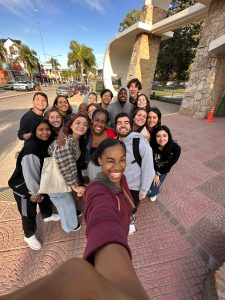
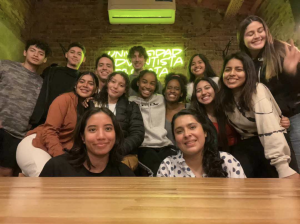
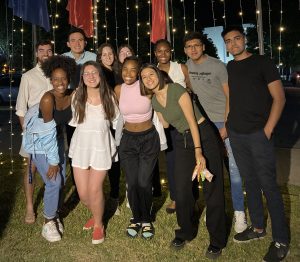
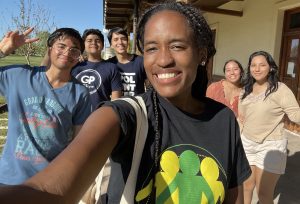
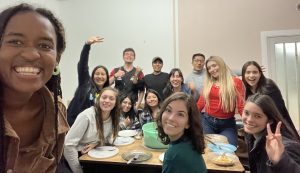
I had the opportunity to travel abroad in Argentina. This 8 month experience allowed me to experience the culture. This included learning the language, traveling to different south american countries, meeting and intentionally interacting with people of different cultural backgrounds. After this, I attended a re-entry retreat, where we discussed the process of going back to the states. We also discussed the values we noticed and we want to implement in our own lives. We discussed similarities and differences, aspects that we miss or struggled with while abroad. I chose this for this competency because I believe immersion in a culture really allows for cultural competency to be developed. I was intentional about meeting many different people and to learn where they were from.
I chose this experience because I realize that engagement is not simply reading about cultures, but physically putting myself in environments where I will grow in cultural awareness. I realized that my viewpoint coming from the USA was limited, and that being in a country for eight months grew my appreciation for cultures and all people. There were many moments while learning that I was unaware of what was being said, and I was humbled and honored by the love and grace that was shown to me by new friends and professors. I will always appreciate this experience, and advocate for students to also participate in ACA by presenting about my experience in a social work class.