
Social workers seek to implement ongoing interventions with the diverse individuals, families, groups, organizations, and communities with which they work. They realize that interventions are not often accomplished in one event, but are rather a continuing process. Every intervention chosen on behalf of those served should be supported by evidence. Social workers utilize knowledge from human behavior and the social environment in facilitating interventions with clients. With the goals of the clients and constituencies in mind, social workers are able to effectively analyze situations and select evidenced-based interventions on behalf of those they serve. Throughout this process, social workers work together with other professionals in order to provide the most impactful interventions.

8A – Implement clinical evidence-based interventions with individuals, families, and/or groups.
Throughout the Advanced Interventions with Individuals class, I learned the basics of Cognitive Behavioral Therapy (CBT) and practiced with multiple pseudo clients. I recorded one of these sessions as a part of the final project. On an affective level, I demonstrated valuing in that I have sought not only to demonstrate CBT in these projects, but also in working with clients and in my personal life as well. On a cognitive level, I demonstrated applying in that I was able to utilize the information that I learned about CBT. Through this, I demonstrated the value of competence, service, and importance of human relationship. Through learning these skills, I am better equipped to serve clients. Not only do I realize the importance and impact of the clients’ personal relationships, but I also recognize the importance of establishing professional rapport with clients throughout this process.
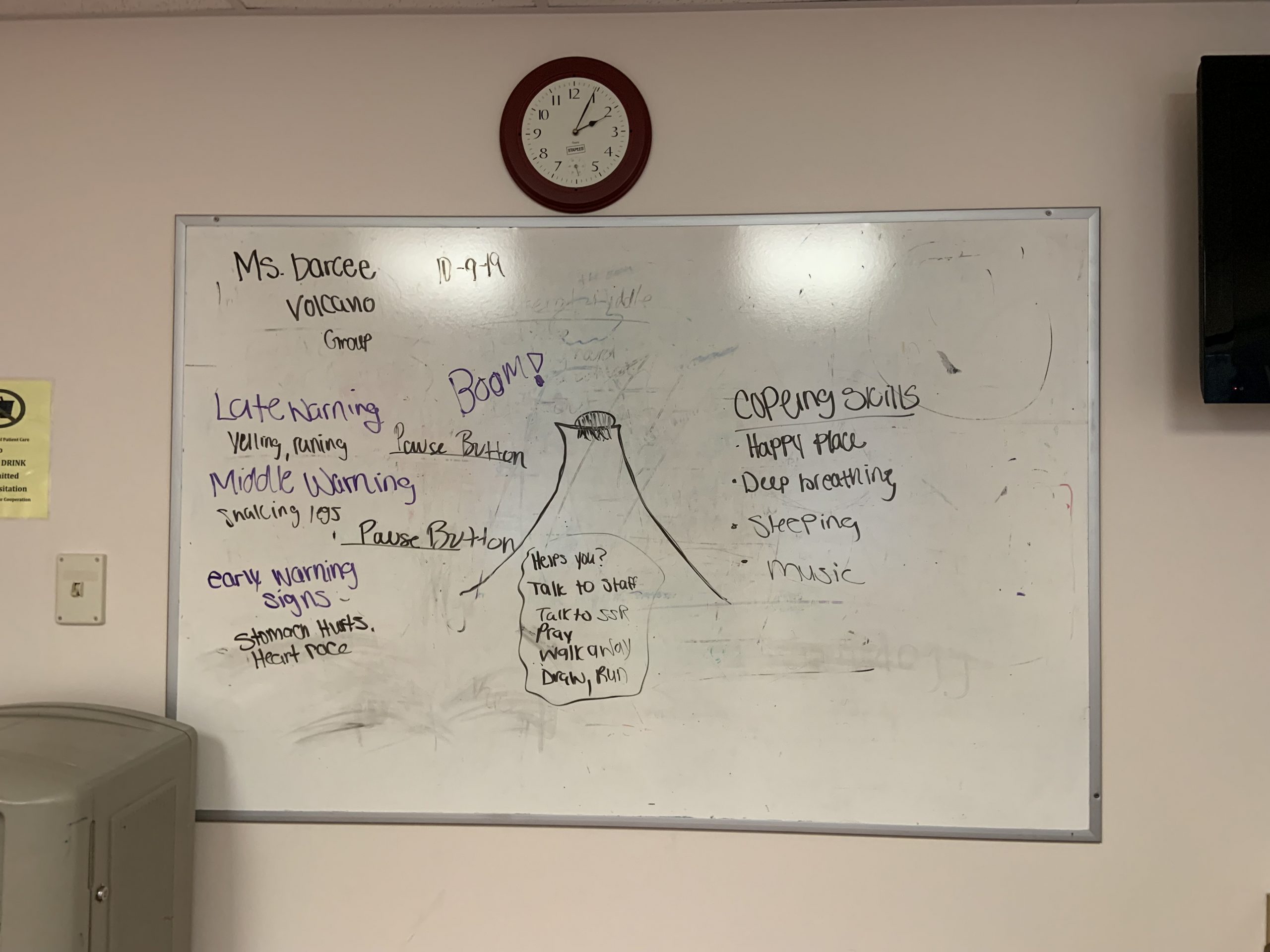
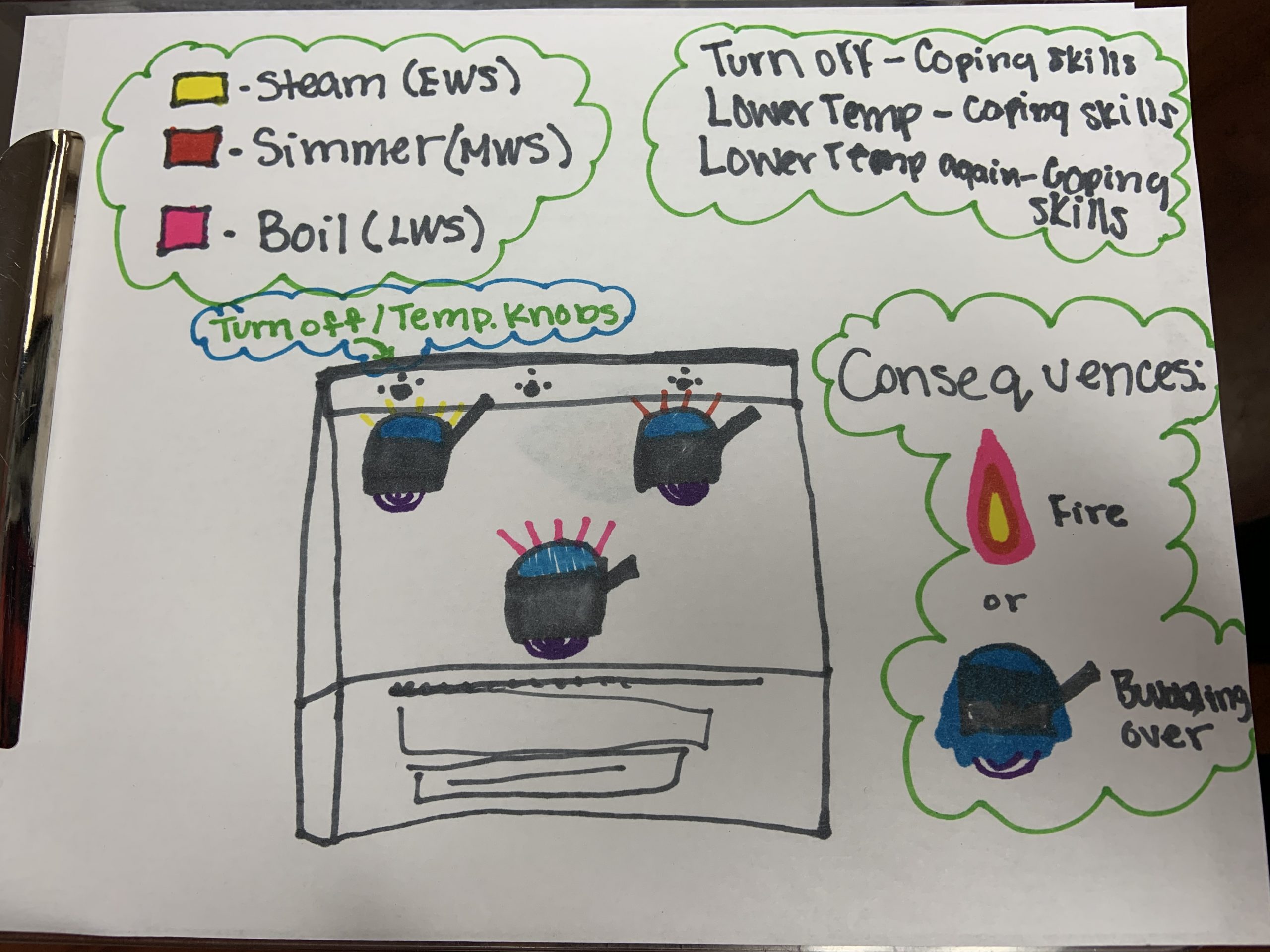
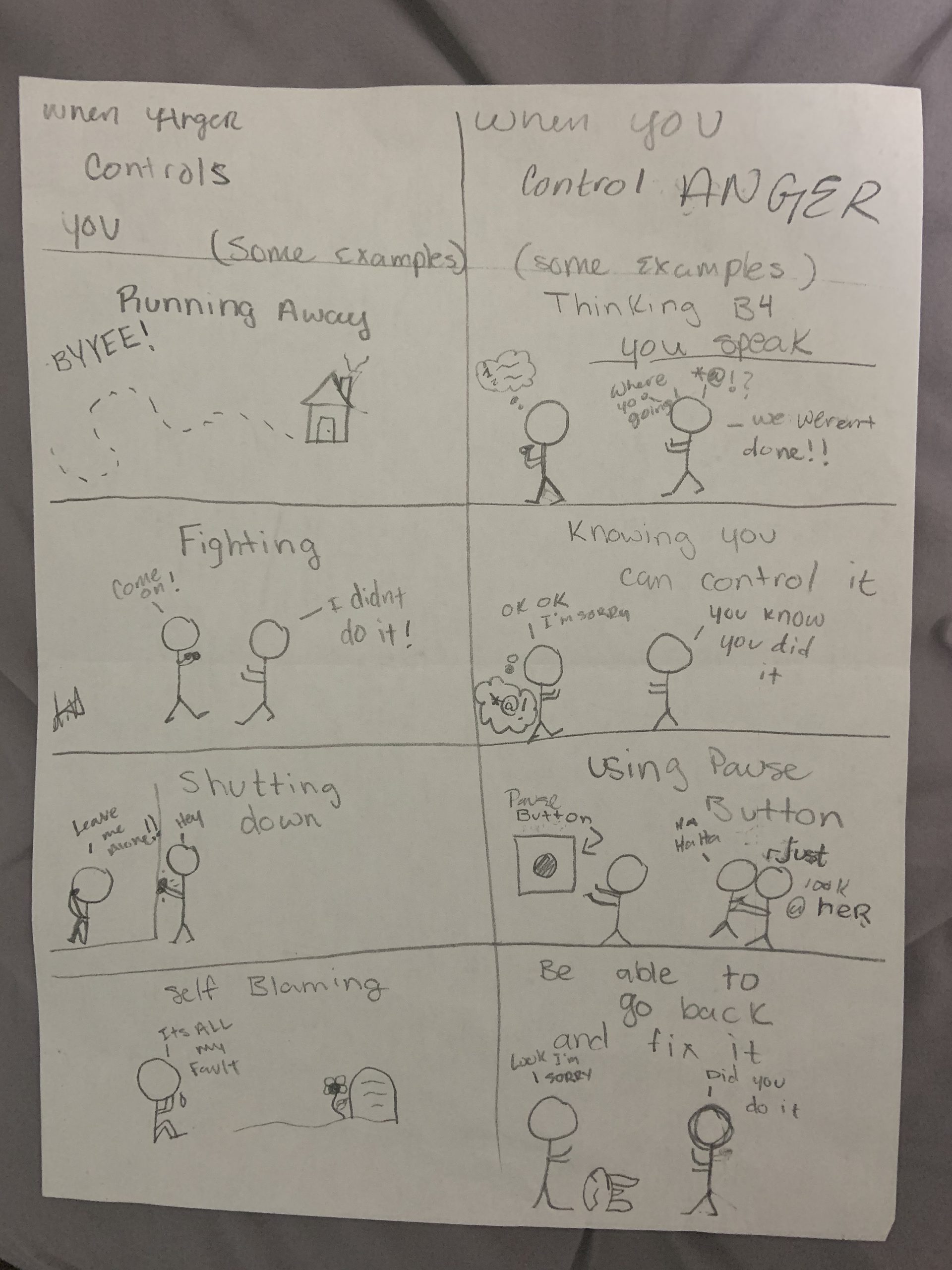
While completing my practicum in a residential behavioral health unit for adolescents, I facilitated a group on anger management, called Volcano Group. During group, I presented evidence-based methods of coping with anger and provided handouts. Often we discussed the early, middle, and late warning signs of anger and appropriate coping skills. We also talked about the consequences of expressing anger inappropriately. The Transtheoretical Model of Change supports the approach taken. First the clients need to be aware of and recognize the consequences of acting out in anger. This aligns with the framework used in this group. This was done using the illustration of a volcano, as shown in the picture below. After learning about these concepts using a volcano, the group was asked to create a personalized illustration to show how anger works. One of the illustrations that was created is shown in the second picture. The third photo was created when the group was asked to draw what it looks like when anger is control verses when they are in control.
8B – Integrate macro level evidence-based strategies with organizations and/or communities.
I demonstrated this practice behavior by working together with three other colleagues to develop an advocacy plan as an assignment for Advanced Social Policy. The decisions made in advocating for women in prison had to be supported by evidence-based strategies. Seeking to use evidence-based measures is important in order to use resources most effectively in making a difference in the community. In order to complete this, I had to learn about evidence-based approaches to advocating for policies.
While completing my practicum at Parkridge Valley Child & Adolescent, I created a resource with information regarding how to obtain a driver license. The resource included information needed for those in DCS custody to work towards getting their driver license. In this way the organization will have a resource to distribute to patients when needed. Providing this information to the patients and their legal guardians empowers them and helps them be ready to live independently in the future. I demonstrated organization and critical thinking skills in determining what information to include within this resource.